The Bailiwick of Ennerdale Est 1251 - Hon. George Mentz JD MBA CWM
|
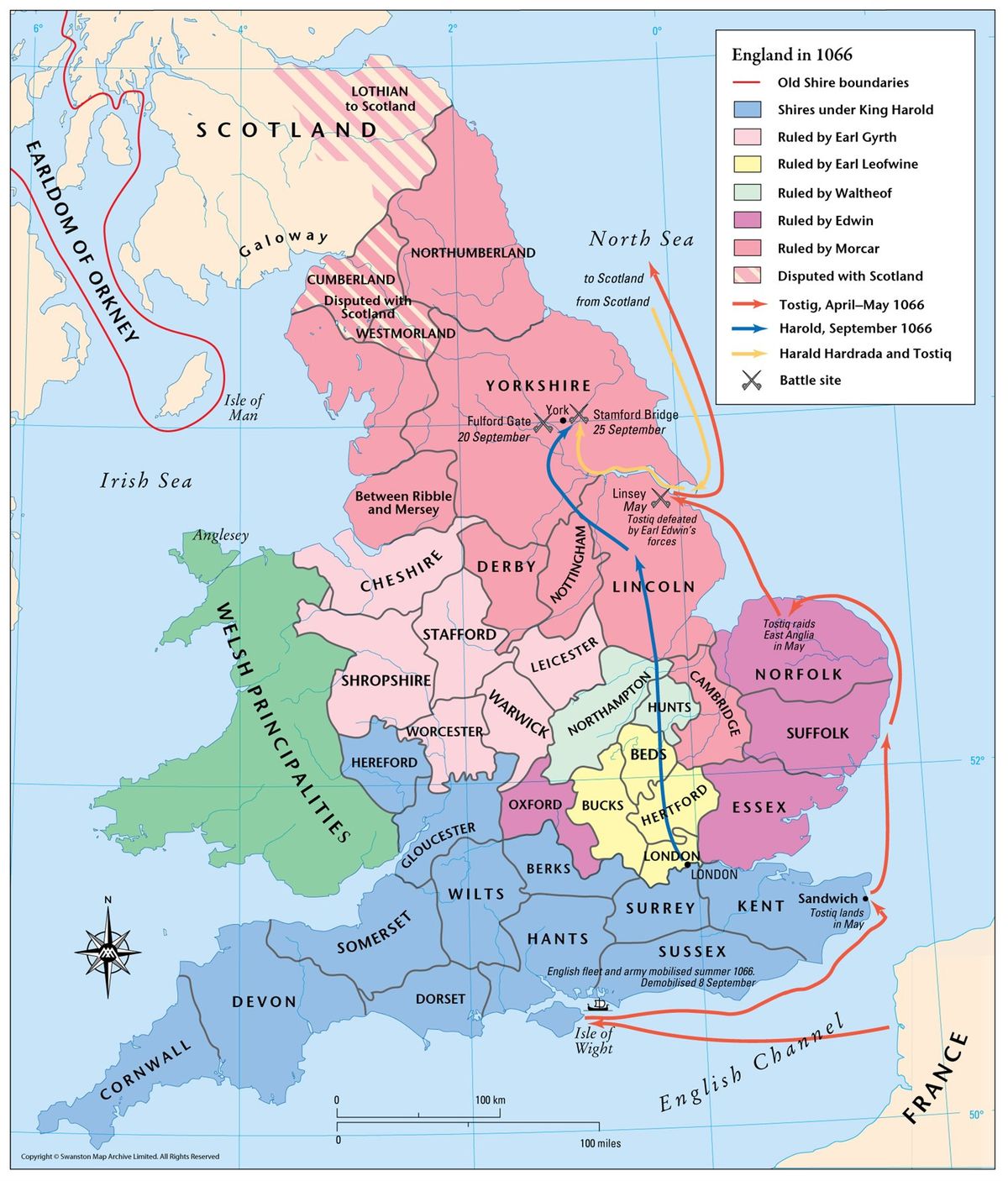
Ennerdale: From the Celtic Kingdom of Cumbria to the Royal Forest and BailiwickAn Ancient Cumbrian, Scottish, Norse and Northumbrian BorderlandThe history of Ennerdale—anciently Avenderdale, Anenderdale, Ananderdale and Eynerdale—begins long before the valley became part of England. Its earliest political identity belongs not principally to Norman England but to the complex northern world of the Brittonic Cumbrians, Strathclyde, Scotland, Northumbria and the Norse-Irish Sea culture. The territory that became Cumberland formed the southern portion of the ancient Brittonic world known as Cumbria or Strathclyde, whose inhabitants spoke the Cumbric language and maintained political and cultural connections extending northward into what is now southern Scotland. The name Cumbria itself derives from the Brittonic concept of the Cymry or "fellow countrymen"—the same linguistic root preserved in the Welsh name for Wales. 945 — Cumberland and the King of ScotsA particularly important event occurred in 945. The Anglo-Saxon Chronicle records that King Edmund I devastated Cumberland AKA "Cumbria" and delivered it to Malcolm I, King of Scots, on the condition that Malcolm become his ally. Thus Cumberland became closely associated with the Scottish Crown more than a century before the Norman conquest of England. The precise constitutional meaning of the 945 arrangement remains debated. It should not simply be described as a modern transfer of national sovereignty. Nevertheless, the historical evidence demonstrates that Cumberland occupied a distinctive northern political position and became subject to substantial Scottish authority. By the eleventh century Malcolm III of Scotland controlled Cumberland, probably as far south as the Derwent-Eamont frontier. That control continued until William II (William Rufus) seized Carlisle and the surrounding territory not until 1092. This chronology is significant because Ennerdale was therefore NOT conquered by William the Conqueror in 1066.
Indeed, most of Cumberland was omitted altogether from the Domesday Book of 1086 because it lay outside effective Norman English administration. Consequently, Ennerdale's historical development is better understood as: Celtic/Cumbrian → Scottish and Northumbrian frontier → heavily Norse-influenced → incorporated into the Anglo-Norman realm after 1092. It was only after this northern expansion of Norman royal power that Ennerdale entered the developing Anglo-Norman feudal structure of Copeland. The Norse EnnerdaleThe cultural history of Ennerdale is equally important. Western Cumberland became heavily influenced by Scandinavian and Viking settlers connected with Ireland, the Isle of Man and the wider Norse world of the Irish Sea. Keep in mind that the Isle of Mann can be seen from the coast and Whitehaven. Their linguistic legacy remains embedded throughout the Lake District:
Ennerdale itself is generally understood as deriving from Anundar-dalr — "Anund's Valley." Thus even after incorporation into the Anglo-Norman realm, the landscape retained a distinctly Norse-Cumbrian identity. 1092 — Ennerdale Enters the Anglo-Norman RealmThe decisive political change came in 1092, not 1066. King William II invaded the Carlisle district, displaced Scottish authority and established English royal power over much of Cumberland. Ennerdale consequently entered the Anglo-Norman political world only twenty-six years after Hastings. This distinction helps explain why the subsequent history of Copeland and Ennerdale differs considerably from the ordinary Domesday manors of southern England. Ennerdale was fundamentally a northern border territory incorporated into Norman England after the Norman Conquest itself. c. 1135 — The Manor of AnenderdaleWithin several decades of the Norman takeover of Cumberland, Ennerdale appears clearly in surviving documentary history. Records associated with St Bees Priory refer to the valley under forms including: Avenderdale — Anenderdale — Ananderdale. A grant associated with Ranulph Meschin and the Meschines family conveyed interests at Ennerdale to the religious houses of St Mary of York and St Bees. This provides evidence that by approximately the reign of Henry I (1100–1135), Ennerdale had become recognizable within the new Anglo-Norman territorial system. Its institutional history as a manor therefore approaches nine centuries. Ennerdale and the Free Chase of CopelandThe clearest surviving medieval legal property descriptive evidence over 700 years ago comes from 1321–1322, when Thomas de Multon of the Baroney of Egremont died seized of:
The phrase requires explanation because a medieval free chase was not simply a forest. What Was a Free Chase?A chase was a legally privileged hunting territory. Like a royal forest, it could contain:
The word forest in medieval law therefore did not mean merely "woodland." It described a territory governed by special rules relating particularly to game, hunting, woodland and associated rights. A royal forest existed by authority of the Crown. A free chase, by contrast, generally represented a hunting franchise enjoyed by a lord under royal authority. It resembled a forest but ordinarily possessed a somewhat different jurisdictional basis. Thus the description: "Eynerdale within the free chase of Coupland Fell" places Ennerdale inside an established medieval hunting and territorial jurisdiction. The documentary evidence expressly establishes this status by 1321–22. Therefore Ennerdale has a documented association with the Free Chase of Copeland Fell going back more than 700 years. The institution itself may be older, but without an earlier instrument expressly describing Ennerdale as within the chase, it is preferable to distinguish between probable earlier origins and the documented 1321–22 date. Copeland, Egremont and the Formation of the BailiwicksBefore the fourteenth-century partitions, Ennerdale formed part of the enormous feudal territory generally known as the Barony of Copeland and later called Barony of Egremont. The barony covered a substantial portion of western Cumberland. The death of the last Multon baron and the subsequent division of the inheritance in the 1330s fragmented this great territorial estate among heiresses and their descendants. This fragmentation encouraged increasingly localized administration. The Copeland estates were administered through territorial divisions described in surviving records in relation to the rivers Ehen, Derwent and Duddon, with bailiffs responsible for particular districts. Ennerdale therefore developed within a governmental environment in which the bailiff was an important territorial officer. Over time, however, Ennerdale itself acquired an unmistakably separate identity as a manor, forest and liberty. Ennerdale as a Distinct Liberty and BailiwickA bailiwick is, in its basic historical sense, the territorial jurisdiction administered by a bailiff. The significance of the word liberty is equally important. A medieval liberty was an area possessing particular franchises or jurisdictional privileges that distinguished it from ordinary county administration. Consequently, the later title: Bailiff of the Liberty of Ennerdale is historically important. It identifies not simply an estate employee but an officer exercising authority over the territorial Liberty of Ennerdale. The evidence therefore supports a progression from: Free Chase of Copeland → localized bailiff administration → distinct Manor, Forest and Liberty of Ennerdale → Crown-administered Bailiwick and Forest. 1554 — Ennerdale Returns to the CrownThe next great constitutional change occurred in 1554. The manor had descended through the Harrington, Bonville and Grey families. Following the rebellion, attainder and execution of Henry Grey, Duke of Suffolk, father of Lady Jane Grey, the family's estates were forfeited. Ennerdale consequently passed into direct Crown ownership. From this point the historical description becomes especially significant. Ennerdale appears variously as the:
Instead of disappearing into the surrounding barony, Ennerdale continued to possess a recognizable territorial and administrative identity. Prince Charles and the Forest and Liberty of EnnerdaleDuring the reign of James I, Crown estates were granted to his son and heir, Prince Charles, Prince of Wales, later Charles I. Records concerning Ennerdale identify the Forest and Liberty of Ennerdale among the royal hunting properties of King Charles I. When Charles became king in 1625, the distinction between the Prince's estate and the Crown naturally changed because Charles himself became sovereign. This episode reinforces the status of Ennerdale during the Stuart period as an identifiable royal territorial estate, forest and liberty. 1633 — Powerful Evidence for the Royal BailiwickThe seventeenth-century administrative record provides some of the strongest evidence for Ennerdale's distinctive institutional identity. In 1633, Algernon Percy, 10th Earl of Northumberland, was associated with the offices of:
These offices are significant because Percy was administering Ennerdale rather than acquiring the manor as its private lord. It is an important note that Cumbria and Ennerdale at one time was part of the Kingdom of Northumbria and that the descendant of the Kings of Northumbria later were Bailiffs of the Bailiwick of Ennerdale. The historical record also shows that the bailiffs were responsible, at least nominally, for management of the "manor and forest," while foresters or rangers assisted with game and forest administration and other officers dealt with rents and manorial business. The combination of Liberty + Bailiff + Forest + Keeper + tenants provides particularly strong evidence of Ennerdale's status as a separately administered Crown territory. It is therefore reasonable to describe seventeenth-century Ennerdale as a: Royal Manor, Forest, Liberty and BailiwickThe terminology should not, however, be interpreted to mean that Ennerdale constituted a sovereign state or was independent of the Crown or county. Rather, it possessed a distinctive jurisdictional and administrative identity within the Crown's territorial system. What Algernon Percy's Offices Tell UsThe three offices reveal different aspects of the jurisdiction. Bailiff of the LibertyThe bailiff represented the administrative authority associated with the Liberty of Ennerdale. The 10th Earl of Northumberland existence as Bailiff of Ennerdale supplies particularly obvious legal support for describing Ennerdale as a Bailiwick, because a bailiwick is fundamentally the district or jurisdiction of a bailiff. Further, a Bailiff of a Royal Forest is another special jurisdiction. Keeper of the ForestThe Keeper exercised responsibilities connected with the Forest of Ennerdale, particularly game, hunting, rangers and forest administration. This confirms that "Forest of Ennerdale" was a legal and administrative description—not merely a geographical reference to trees. Conductor of TenantsThis office concerned the Crown's tenants and their obligations within Ennerdale and further demonstrates organized territorial estate administration. Together, these offices reveal an unusually complete administrative structure. The Crown Manor and Forest, 1554–1822Following the Grey forfeiture, Ennerdale remained associated with the Crown until its eventual alienation to the Lowther family. From 1554 until 1822, a period of approximately 268 years, Ennerdale was therefore fundamentally a Crown Bailiwick. During this long period it was administered through officers including:
The Crown ultimately sold the Liberty of Ennerdale to William Lowther, Earl of Lonsdale, in 1822. That sale ended nearly three centuries of direct Crown ownership but did not erase the much older history of Ennerdale as a manor, forest, chase territory, liberty and bailiff-administered jurisdiction. Nearly Nine Centuries of Institutional HistoryEnnerdale's history can therefore be divided into several remarkable eras: Ancient period — Cumbrian/Brittonic 10th–11th centuries — Scottish and Northumbrian frontier Viking Age — Norse-Cumbrian Ennerdale Until 1092 — Outside effective Norman English rule 1092 onward — Anglo-Norman rule c. 1135 onward — Manor of Anenderdale/Avenderdale By 1321–22 — Free Chase 14th–16th centuries — Copeland/Egremont inheritance 1554 — Crown ownership Stuart period — Forest and Liberty of Ennerdale 1633 — Royal Bailiwick structure clearly evidenced 1822 — Crown sale to the Earl of Lonsdale Historic Offices of the BailiwickThe documentary history provides a basis for preserving the memory of Ennerdale's ancient offices. Historical or modern ceremonial terminology should nevertheless distinguish documented historic offices from offices recreated or adopted for contemporary ceremonial purposes. Among titles that reflect the traditional administrative vocabulary of a manor, liberty or bailiwick are:
This distinction preserves the dignity of Ennerdale's traditions without presenting newly adopted ceremonial offices as though every title can be traced directly to medieval records. The Historical Character of EnnerdaleEnnerdale should therefore not be understood merely as an ordinary English manor created after 1066. Its history is considerably richer. It emerged from the ancient Brittonic Kingdom of Cumbria, passed through centuries of Scottish and Northumbrian frontier politics, absorbed profound Norse influence, and remained outside the effective Norman kingdom at the time of the Domesday survey of 1086. Only after William II's conquest of Cumberland in 1092 did Ennerdale enter the Anglo-Norman realm. Thereafter it developed within the enormous Barony and Free Chase of Copeland, becoming a documented manor by the early twelfth century and expressly appearing within the Free Chase of Coupland Fell by 1321–22. Following the Grey forfeiture of 1554, its identity became particularly clear. Ennerdale was a Crown-held Manor, Forest and Liberty, administered through royal officers. The seventeenth-century office of Bailiff of the Liberty of Ennerdale, combined with that of Keeper of the Forest, provides especially strong evidence for describing Ennerdale during the Crown period as a Royal Forest Bailiwick—a distinctive Crown jurisdiction administered through its own officers. Thus Ennerdale represents an extraordinary survival of the institutional history of Britain's northern borderlands: Celtic in origin, Scottish and Northumbrian in political inheritance, Norse in culture and name, Anglo-Norman in its later feudal organization, a Free Chase of medieval Copeland, and ultimately a Royal Manor, Forest, Liberty and Bailiwick of the Crown.
Ennerdale as an Ancient Crown Bailiwick and Royal ForestThe historical record supports describing Ennerdale as an ancient forest and bailiff-administered liberty that became a Crown-held Royal Forest jurisdiction in 1554. Its forest and bailiwick traditions reach back into the medieval administration of Copeland or Egremont. Medieval Origins of the BailiwickBefore 1338, Ennerdale formed part of the great Barony and Free Chase of Copeland (Egremont). By 1321–22, records expressly described “Eynerdale within the free chase of Coupland fell.” A medieval free chase was more than a hunting ground. It was a legally privileged territory in which special rights relating to hunting, game, woods, wastes and other resources operated. Thus, Ennerdale was already associated with a distinct forest/chase jurisdiction more than 700 years ago. Following the division of the Multon inheritance in 1338, the Forest of Copeland was partitioned into separate territorial portions. Lancaster University's Cumbrian Manorial Records identifies Ennerdale as one of those portions and states that Ennerdale “was never reunited with the rest of the barony and was forfeited to the Crown in 1554.” The wider Copeland estates were also administered through territorial bailiwicks, including districts described by the rivers Ehen, Derwent and Duddon. This provides the administrative background from which Ennerdale's later expressly documented liberty and bailiff developed. 1554 — A Crown Forest and LibertyThe decisive event occurred in 1554, following the attainder of Henry Grey, Duke of Suffolk, father of Lady Jane Grey. Ennerdale was forfeited to the Crown and remained under Crown ownership until its eventual sale in 1822—approximately 268 years of Crown tenure. During this period Ennerdale continued to be identified separately as the: Manor of Ennerdale — Forest of Ennerdale — Liberty of Ennerdale — Manor or Forest of Ennerdale. This is important because Ennerdale did not simply disappear administratively into the larger Barony of Egremont. Its distinct forest and liberty identity continued under the Crown. The Crown BailiwickThe strongest evidence for Ennerdale's bailiwick character is the documented office: Bailiff of the Liberty of EnnerdaleHistorically, a bailiwick is the district or jurisdiction entrusted to a bailiff. Thus, the existence of a Liberty of Ennerdale administered by its own bailiff provides a direct historical basis for describing that jurisdiction as the Bailiwick of Ennerdale. By the seventeenth century, the administrative structure is particularly clear. Records associated with Algernon Percy, 10th Earl of Northumberland, identify the offices of:
These offices are significant when considered together. The Bailiff administered the Liberty; the Keeper exercised responsibilities connected with the Forest; and the Conductor of Tenants dealt with the Crown's tenant administration. Thus, the surviving terminology expressly combines: Crown ownership + Forest + Liberty + Bailiff + Forest Keeper + tenant administration. That combination provides strong historical grounds for describing Crown-era Ennerdale as a Royal Forest Bailiwick. A Royal Forest Bailiwick for CenturiesThe essential chronology is: 1321–22 — Ennerdale is expressly recorded within the Free Chase of Coupland Fell, establishing more than 700 years of documented forest/chase history. 1338 — The Forest of Copeland is partitioned, with Ennerdale becoming a separately identifiable portion that Lancaster University notes was never reunited with the remainder of the barony. 1554 — Ennerdale is forfeited to the Crown, beginning approximately 268 years of direct Crown ownership. 17th century — The terminology “Bailiff of the Liberty of Ennerdale” and “Keeper of the Forest of Ennerdale” demonstrates that the Crown estate possessed both a distinct liberty/bailiwick administration and forest administration. 1822 — The Crown's ownership ends with the sale of Ennerdale to the Earl of Lonsdale. ConclusionEnnerdale's claim to historical Royal Forest and Bailiwick status therefore rests upon several centuries of institutional evidence rather than merely modern ceremonial terminology. Its forest jurisdiction can be documented for more than 700 years, beginning with its recorded position within the Free Chase of Copeland by 1321–22. Its separate territorial identity became clearer following the 1338 partition of Copeland Forest. After its forfeiture to the Crown in 1554, Ennerdale remained Crown property for approximately 268 years. Most importantly, the historical office of “Bailiff of the Liberty of Ennerdale,” existing alongside the “Keeper of the Forest of Ennerdale,” demonstrates that Ennerdale was administered as both a Liberty and Forest under Crown authority. Accordingly, the historically careful description is:
|
The Bailiwick Liberty and Forest of Ennerdale, spanning over 17,000 acres in Cumbria, stands as one of the largest historic manors in all England. Renowned for its ancient liberty status and judicial independence, Ennerdale today forms part of a UNESCO World Heritage landscape and is recognized as the 9th largest National Nature Reserve in England. With its rugged forests, glacial valley, and ecological significance, the Ennerdale estate uniquely blends feudal heritage, environmental stewardship, and cultural preservation, making it both a living legacy and a vital part of the nation’s natural patrimony.
International Lawyer - Mentz Law Firm ™ - LA USA - Fed Cts. Colorado USA Founder of the 1st Educational Body in the USA to Earn SIS Sanction - ESQ & TUV Accreditation and ISO 9001, ISO 21001 & ISO 29993 Certification for Educational Standards - Promoting ACBSP and Dept of Education Accredited Education & Exams Wordlwide to Enable Graduates of Business Schools to Seek Certifications. www.gmentz.com * www.GeorgeMentz.com * www.MentzLaw.com * www.LawyerLouisiana.com * www.AttorneyLouisiana.com * George Mentz LinkedIn * www.NewYorkGazette.com TRADEMARK ID#: Commissioner Mentz - As Seen in the:

Amazon Author * Twitter * O-Books * LinkedIn * Facebook * LinkedIn EU * Academia * George Mentz * George Mentz Author Bestselling Award Winning * Commission George Mentz * George Mentz White House Trump Press * Aspen Commission * Ennerdale News * Ennerdale Bridge * Mentz 100 Million * Ennerdale Facebook * Aspen Commission * Mentz Education *